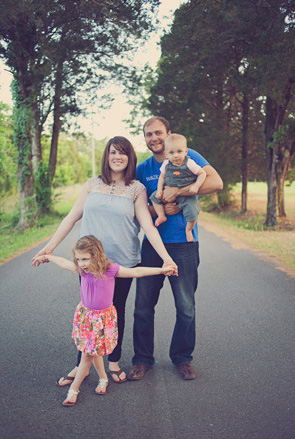
What is Person-First Language, you ask? To put it simply, it is a way of referring to people in a way that respects them as people first, and their disability or illness last.
Some examples:
Don't say: The Autistic Boy
DO say: The boy with Autism
Don't say: The down Syndrome child
DO say: The child who happens to have down Syndrome.
Don't say: That person IS Special Needs
DO say: That person HAS Special Needs
Get it? Pretty easy.
The biggest goal of this day is to eliminate the use of the R-Word. That's right....retarded. This word gets thrown around so often in our culture in a derogatory way. It hurts my heart. When you use the r-word to describe something as silly, or useless you are in fact describing people with cognitive impairments as silly or useless.
It is SO easy to break this habit! Add a little bit of intentionality to your speech and you are good to go!
After all, we are ALL made in the image of God!
There are some great videos floating around today, but I had to share this one. It's made by students at my Alma Mater! Go Lakers!
My sweet friend, Kate, is here to share a story with you today. Enjoy!
~ ~ ~ ~ ~ ~ ~ ~ ~ ~ ~ ~ ~ ~ ~
Two Julys
ago, shortly after we moved to rural Alabama (#thingsIneverthoughtI’dsay) we
took our daughter Madeline to see the fireworks. She was two years old at the time.
Madeline
is special for a lot of reasons, but one of them is that she was born blind.
We found
out when she was four months old.
(Our story
starts here, and continues
hereand here .)
Since we received
Madeline’s diagnosis in 2008, we’ve been waiting for the day that she can tell
us what she can see. Light? Shadows?
Shapes? Colors? Big things? Bright things? Close things?
These were
questions that only Madeline could answer.
You would think that with all the advances in modern medicine that there
would be some kind of test to run – but there isn’t. The only way to know what the world looks
like to Madeline is to ask her.
(I now
know that this is the case for every child.
Vision loss simply served to make it very prominent and literal for
us. One of the lessons we’ve learned
through this adventure is: ask your children how they see the world – then
listen to them.)
On the
Fourth of July, 2010, we took a very chatty, verbal (read: never shuts up!)
two-year-old Madeline to see the fireworks.
We underestimated traffic in the most serious way and ended up watching
from the side of a highway, next to some fellow Alabamians who were coolin’ it
in the bed of their pickup truck on the exit ramp. We keep it classy down here, folks.
We shot a
video that has become one of my family favorites (that’s saying a lot, because
it’s hard to beat the face my cat made when he hung himself in our living room
curtains). In this little 2 minute
video, Madeline tells us about fireworks in her own words. PRE-CIOUS.
Take a
look:
My
favorite part is when she says they’re going off and on, like clapping. She had no experience with lights going off
and on, or TVs going off and on, but she understood sound. When you clap, there is a sound – then it’s
gone –a sound – then it’s gone – a sound – then it’s gone. Just
like fireworks. Watching her mind work;
it’s amazing.
Wishing
you all a magical 4th!
much love,
Kate
(For any of you know kids with special needs:
fireworks are a great multi-sensory experience! You can hear them, smell
them, feel them, and see them! There is super high-contrast (bright
lights in the pitch-black sky) - so even people with low vision can enjoy them
in a lot of ways. If your child has
sensory issues, don’t forget the earplugs!)
Kate Elizabeth Conner is a writer, speaker, and first generation southerner who spends her days learning braille, counseling teenagers via text message, and adjusting to life in rural Alabama. Kate writes at http://kateelizabethconner.com/ about surviving parenthood, teenagers, and her twenties with her faith and sense of humor intact. She believes in music and coffee and prose–and in all the world, nothing has taken hold of her like Christ.